

Avenidas Novas and Saldanha: living on Lisbon’s planned avenues
Most of the old Lisbon that visitors photograph is in the hills by the river. The Avenidas Novas is the other Lisbon: flat, laid out on a grid, with wide pavements and long avenues of five- and six-storey apartment buildings. It is where a lot of Lisbon families actually live. We have worked on two apartments here, Duque on Avenida Duque de Ávila and Bombarda on Avenida Miguel Bombarda, and both taught us something about what buyers want in this part of the city.
A district drawn on paper
The Avenidas Novas exist because of one engineer. Frederico Ressano Garcia ran the city’s technical department from 1874, and in 1888 his team produced the Plano das Avenidas. It took Lisbon north from the end of Avenida da Liberdade. North of Praça Duque de Saldanha, the plan laid out a central avenue, then called Avenida Ressano Garcia, now Avenida da República, with parallel avenues on each side and cross streets running out to Campo Pequeno and Entrecampos.
Avenida da República opened in 1904. By 1910 about half of it was built. The best buildings went up in the following two decades, several of them Valmor prize winners, and the last block was finished in 1934. One of them, number 15, built in 1919, has housed Pastelaria Versailles since 1922. It is still the best place to understand the neighbourhood: a mix of retired couples, students from Técnico and office workers, all in the same queue.
Saldanha, the hinge
Praça Duque de Saldanha is where everything meets. The yellow and red metro lines cross underneath, so the airport is a direct ride on the red line, and Marquês de Pombal is two stops away on the yellow, where you change to the blue line for the Baixa. Avenida Fontes Pereira de Melo runs south to Marquês de Pombal, Avenida da República north to Campo Pequeno, and Avenida Duque de Ávila east–west across the grid.
People searching for “Saldanha apartments” usually mean anything within ten minutes’ walk of the square. That is a sensible way to look. Duque is about 150 metres from it. Bombarda is roughly 570 metres away, closer to the Gulbenkian than to Saldanha. That distinction matters when you compare listings, because “Saldanha” in an advert can mean almost anywhere in the parish.
The buildings
Here is what you will find on these avenues:
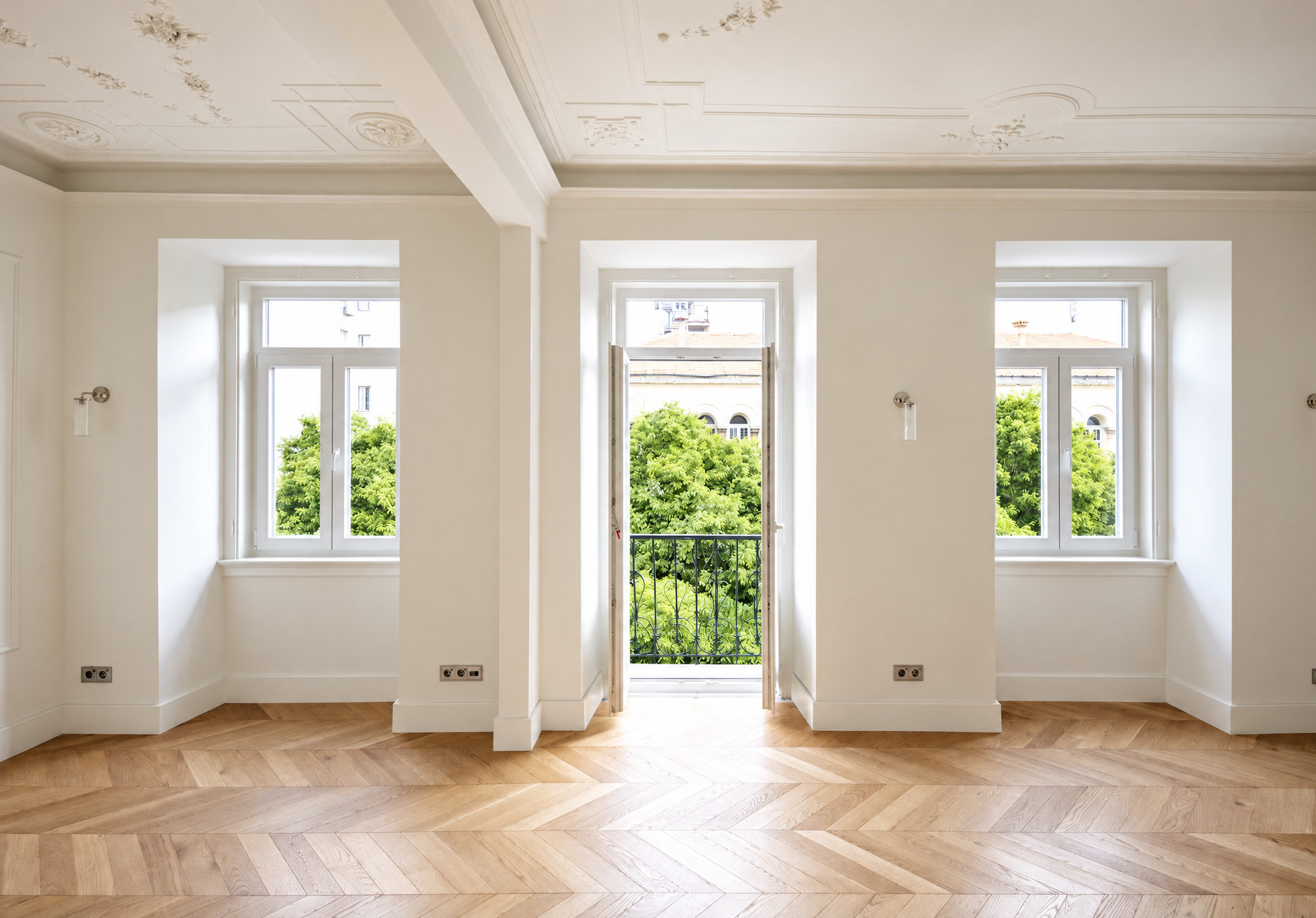
Early twentieth-century buildings (roughly 1900–1930) with high ceilings, decorative plasterwork, generous rooms and often a long corridor. Duque is in one of these, around 120 years old. The weak points tend to be old wiring and plumbing, poor sound insulation between floors and, often, no lift. Duque is on the second floor with no lift. We say so clearly on the page because it is the first thing some buyers ask.
Mid-century and later buildings (1940s–1970s), especially towards Campo Pequeno and the edges of the grid. They have more regular plans, lifts, sometimes garages, and are less ornate.
Recent new builds, usually on sites where an older building was replaced. These have parking and modern services, and they are mostly priced accordingly.
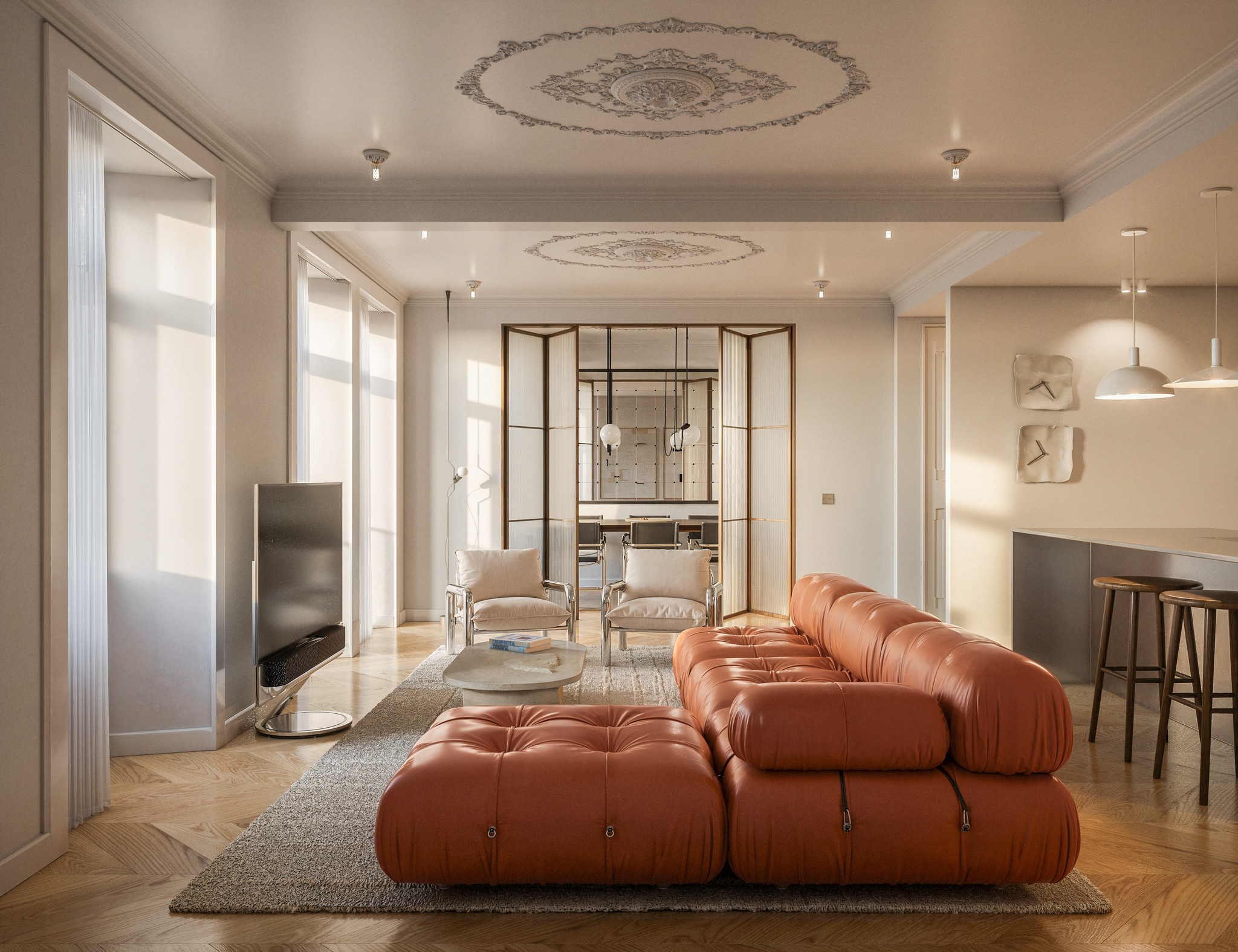
At Duque and Bombarda we renovated single apartments rather than whole buildings. Inside, that means we could rebuild almost everything: oak chevron floors, natural stone in the bathrooms (Rosa Lioz, Viana Verde, Tiger Onyx), a stainless-steel kitchen with Miele appliances, air conditioning and VMC ventilation at Duque. What it can’t change is the common parts: the stair, the roof and the façade belong to the building’s owners’ association. When you buy here, read the minutes of the condominium meetings. They tell you whether the roof is due, whether a lift is planned and who pays.
Daily life
The Avenidas Novas work for everyday life. The Mercado 31 de Janeiro is close to Duque. Instituto Superior Técnico, one of Portugal’s main engineering schools, is a few streets east. The Calouste Gulbenkian Foundation, opened in 1969 with its museum, auditorium and garden, is about ten minutes on foot from Duque and closer still from Bombarda. Parque Eduardo VII is a little further south-west. Campo Pequeno, whose arena now hosts concerts, is at the top of Avenida da República.
It is quieter in the evening than Chiado or Bairro Alto. Restaurants close earlier. For many of our buyers, that is exactly the point.
What to check before you buy
- Floor and lift. Many early buildings have no lift, and a fourth floor without one is a different flat at 70.
- Front or back. Rooms on the avenue get light and some traffic noise; rooms at the back are quieter and often face an inner block.
- Energy certificate. Duque has energy certificate B. Ask for the certificate number and validity before you commit.
- Condominium. Monthly fees, planned works and any arrears.
- Parking. Street parking is regulated. If you need a space, rent or buy one separately.
Tax, in one paragraph
Since 25 May 2026, non-resident buyers of residential property in Portugal pay a flat 7.5% IMT under Decree-Law 97/2026, with no exemptions. The difference can be refunded if you become tax resident within two years or let the property at a moderate rent for at least 36 months in the first five years. Residents pay the normal 2026 brackets. Stamp duty of 0.8% applies to everyone. Take advice on your own case.
Our two apartments
Duque, at Avenida Duque de Ávila 127, is a fully renovated T3 on the second floor: two suites, a third bedroom, a large walk-in closet, three bathrooms, a storage room and a French balcony. It is for sale and ready to move into. See the Duque apartment for sale in Saldanha.
Bombarda, on Avenida Miguel Bombarda, is a renovated T4 with three ensuite bedrooms. It is reserved, but the Bombarda page shows the specification and the kind of work we do in this part of the city.
Sources: FCSH+Lisboa (NOVA FCSH), ‘Lisboa das Avenidas Novas’ and ‘Avenida da República: desfile de notáveis’ (2016); Fundação Calouste Gulbenkian, history of the Museum (opened 2 Oct 1969); Decreto-Lei n.º 97/2026, de 20 de maio, Portal das Finanças; AT Ofício Circulado 40131/2026.