

Buying an apartment near Chiado
People ask me for “an apartment in Chiado” and usually mean something slightly wider. They mean the few streets where you can walk to Rua Garrett for coffee, to São Carlos for the opera and down to Cais do Sodré for the train, without getting in a car. That area runs over the official parish lines. Chiado itself straddles two parishes, Misericórdia and Santa Maria Maior; Bica, Bairro Alto and Santa Catarina are all in Misericórdia. When we looked for a building to restore, we searched that whole slope, not just the postcode.
This guide is what I would tell a friend buying here, from someone who has spent the last few years on one of these buildings.
What “Chiado” actually is
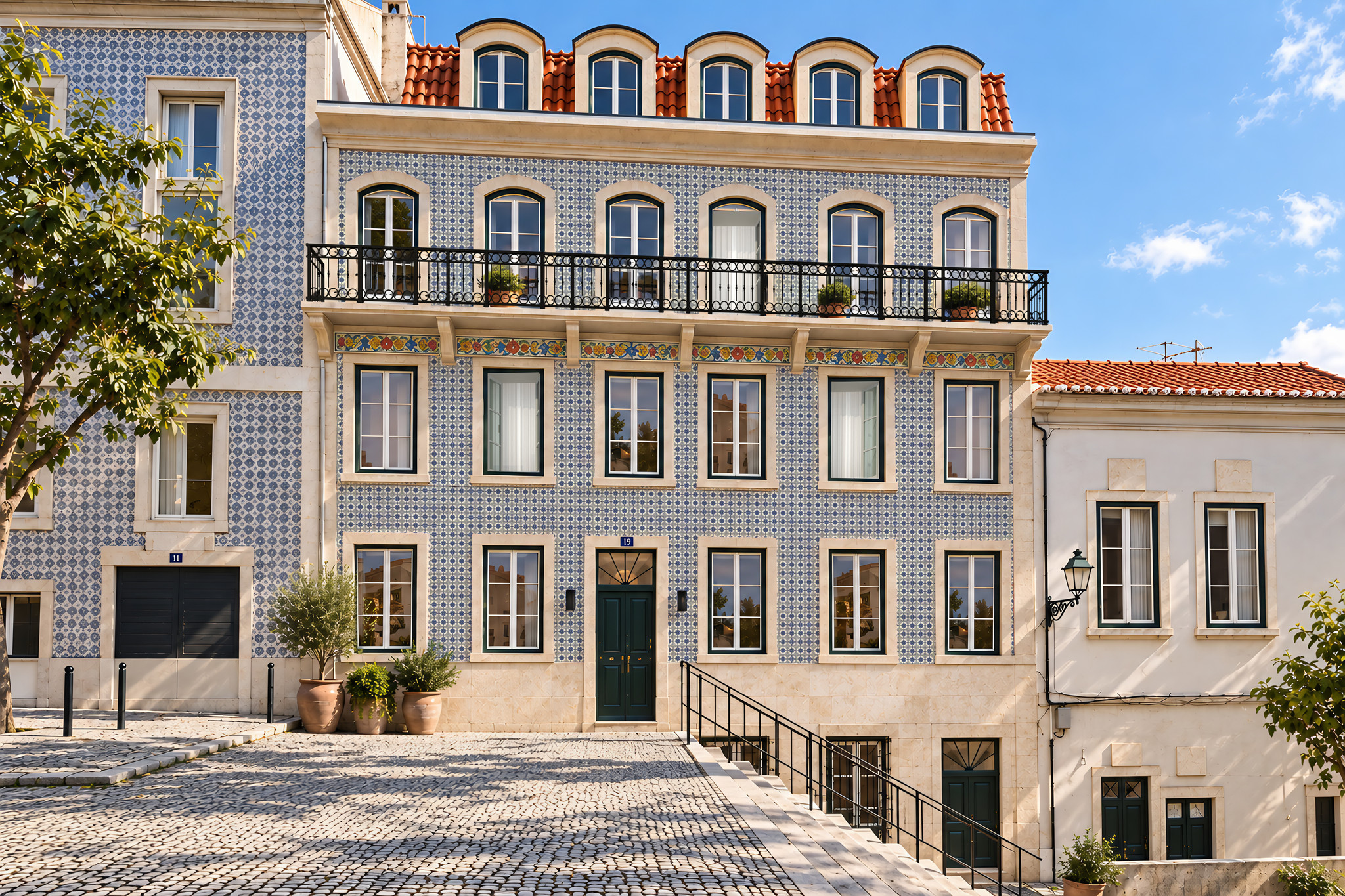
Chiado is small. The core is Largo do Chiado, Rua Garrett, Rua do Carmo and Rua Nova do Almada, between the Baixa and Bairro Alto. Most of it is Pombaline, rebuilt after the 1755 earthquake to a standard plan, and a big part of it was rebuilt again after the fire of 25 August 1988. That fire started in the Grandella department store and destroyed or damaged around seventeen buildings. Álvaro Siza led the reconstruction. He kept the façades and reorganised what was behind them, with shops at street level, offices above and flats on the upper floors. That is why so much of the Chiado housing stock looks old from outside and is fairly recent inside.
For a buyer that has two consequences. Apartments in the central streets are few and rarely come up. And the streets just around Chiado (Bica, Santa Catarina, the lower edge of Bairro Alto) give you the same walk with a quieter front door.
The streets around it
Our building, Pedra Friso, is on Travessa da Portuguesa in Bica. On foot it is about four minutes to Praça Luís de Camões, two to the Elevador da Bica and three to the Miradouro de Santa Catarina. We never call it “in Chiado”, because it isn’t. It is near Chiado, and for daily life that is the better place to be.
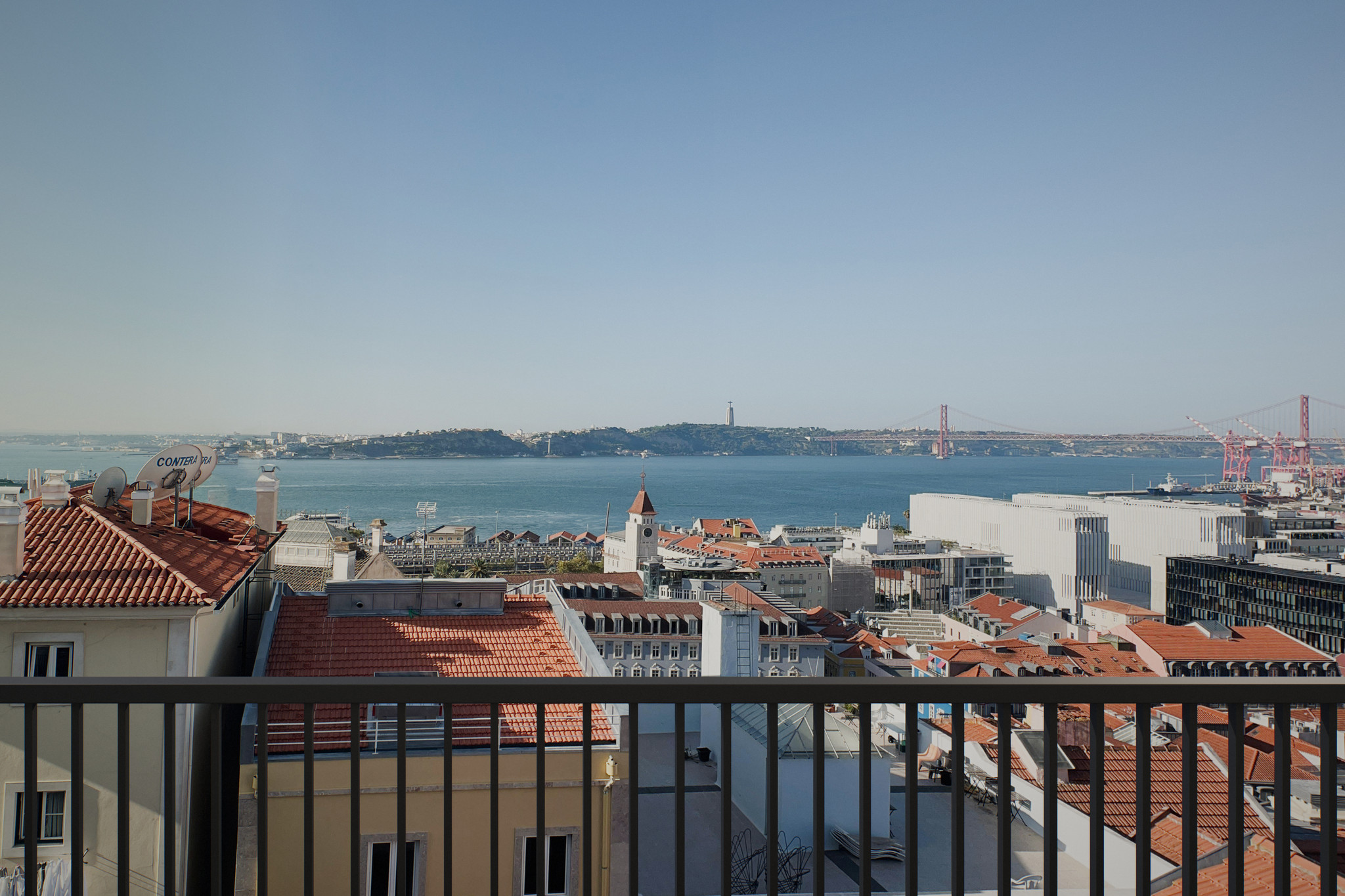
Bica is steep. The Elevador da Bica has climbed Rua da Bica de Duarte Belo since 1892, and tram 28 stops at Calhariz at the top. Downhill you reach the Mercado da Ribeira and Cais do Sodré, with the green metro line, trains along the river to Cascais and ferries across the Tagus. If you need a car every day, this part of Lisbon will frustrate you. If you don’t, it is hard to beat.
What kind of building you are buying into
Around Chiado you will mostly see three types:
- Pombaline and post-Pombaline buildings with a timber “gaiola” frame inside masonry walls. Check whether the structure has been surveyed and reinforced. Ours was.
- Nineteenth-century buildings with tiled façades, Lioz stone surrounds and iron balconies. They are beautiful and often tired: old wiring, no lift and steep common stairs.
- Buildings restored as a whole, where one developer has taken the full building, reinforced it and fitted new services and a lift. This is what we do. The advantage is that the structure, roof, façade and services are all new or repaired at the same time, under one licence.
Whichever you look at, ask for the caderneta predial (the tax record), the certidão permanente (the land registry extract), the licença de utilização or the building licence, and the energy certificate. If an agent can’t produce them quickly, take that as information.
Light, orientation and noise
On these slopes, orientation matters more than floor area. At Pedra Friso the street front faces north and the balconies face south towards the river. That is why we put the living rooms on the south side and gave every floor a balcony on a light structure. Units 1 and 2, on the top floors, have the river view; Units 5 and 6 face north only. We publish the orientation of every unit on the project page because I would want to know it before a viewing.
Noise is the other question. Rua Garrett and the Bairro Alto streets are busy until late. One or two streets away it drops a lot. Visit at 11 pm on a Friday before you sign anything.
The buying process, briefly
In Portugal the usual order is:
- Get a NIF (tax number). A non-resident will normally need a tax representative.
- Agree terms and sign a CPCV (promissory contract), usually with a deposit. For a building still under works, the CPCV sets out the specification, the payment stages and the completion date. Ours is Q2 2028.
- Pay the IMT (transfer tax) and stamp duty (0.8%) before the deed.
- Sign the escritura (deed) and register the property.
Use your own lawyer. We encourage it, and a good one will read the CPCV more carefully than you will.
Tax: the 2026 change for non-residents
This is the one rule that has changed this year, and it surprises people. Since 25 May 2026, under Decree-Law 97/2026, a buyer who is not tax resident in Portugal pays a flat 7.5% IMT on a residential property, with no brackets and no exemptions. The exceptions: you were already tax resident in Portugal at some point, you become resident within two years of the purchase, or you let the property at a moderate rent within the legal limits for at least 36 months in the first five years. In those cases you can ask the tax authority to refund the difference. The application has to be made within six months of becoming resident or signing the lease.
For residents, the normal 2026 IMT brackets apply, from 0% up to a flat 7.5% above €1,150,853 for a main home. Some commentators have argued that the non-resident rule only took effect on 1 September 2026. The tax authority applies it from 25 May. Check your own case with your lawyer before you sign the deed.
What we would look for
If I were buying near Chiado now, I would want a south or west aspect, a lift, a building whose structure has actually been reinforced, and a street I can sleep on. That list is more or less how we designed Pedra Friso: twelve apartments, T0 to T2, with a new lift opening into each one, by alva arquitectos.
You can see every unit, with floor, area and orientation, on the Pedra Friso page. Prices are on request.
Sources: Decreto-Lei n.º 97/2026, de 20 de maio (art. 6.º, CIMT art. 17.º n.º 10), Portal das Finanças; AT Ofício Circulado 40131/2026; AT Ofício Circulado 40129/2026 (IMT tables 2026); CCA, Álvaro Siza fonds, ‘Reconstrução do Chiado 1988–1998’; Público, 25 Aug 2018.