

New developments in Lisbon: new build, restored, or both
When people search for new developments in Lisbon they usually picture a glass block with a pool on the roof. Some of the city’s new projects are exactly that. Most of what we build is something else: an old building, emptied, reinforced and fitted out to a new-build standard, sold as new apartments behind a façade that has been on the street for generations. We also have one genuinely new house, a villa in Oeiras.
So when I am asked whether to buy “luxury new build” or “restored” in Lisbon, my honest answer is that the label matters less than a handful of specific things. Here they are.
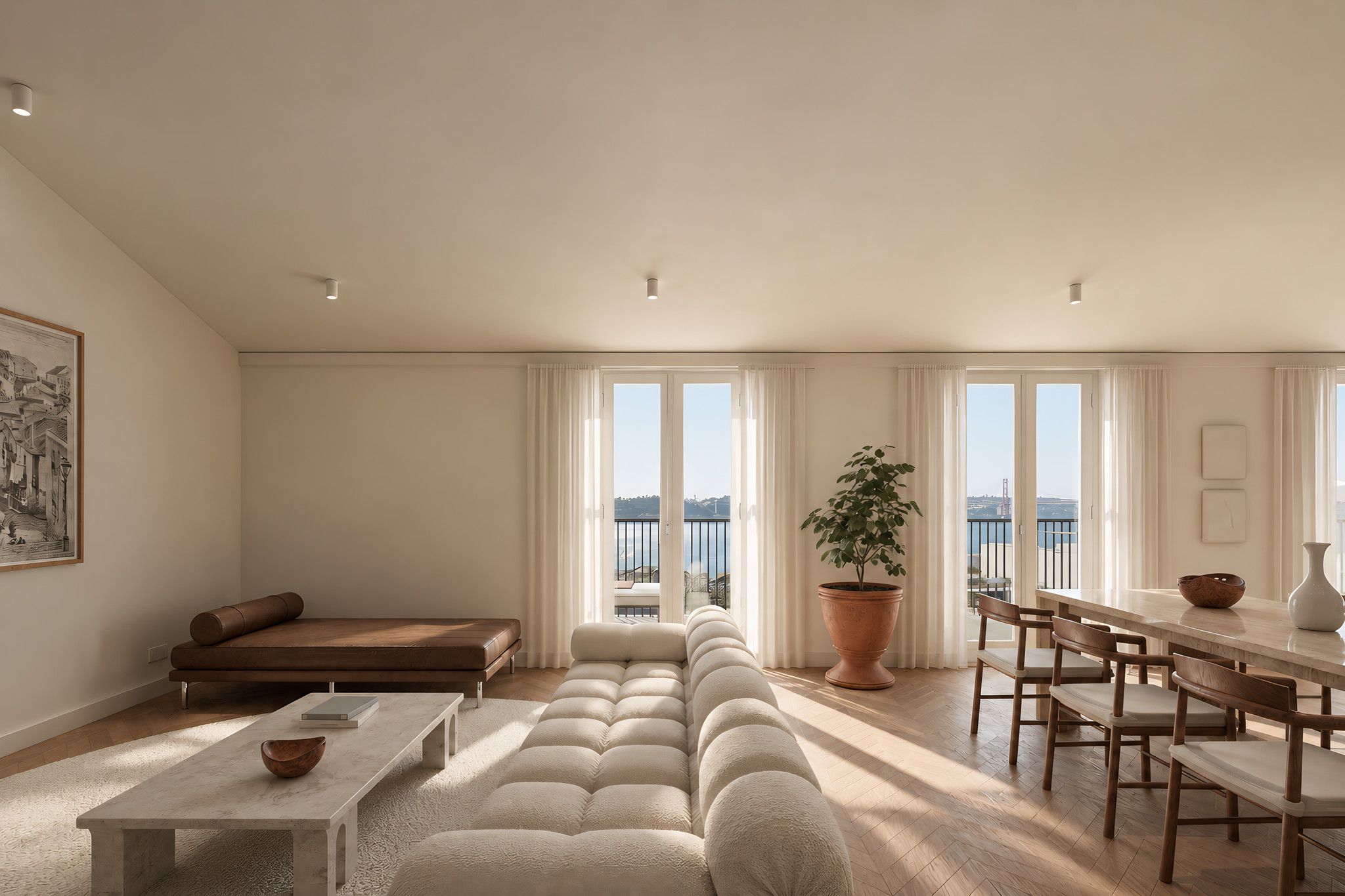
What “new” means in Lisbon
There are roughly three kinds of new development in the city:
New build on a cleared site. You get modern structure, underground parking, regular plans and usually a lift and concierge. The trade-off is location. Large clear sites are rare in the historic centre, so these projects tend to be on the edges: the riverside to the east, Alcântara, parts of the Avenidas Novas, or outside the city.
Whole-building restoration. A developer takes an entire old building, keeps the façade and what is worth keeping, and rebuilds the rest: structure, services, lift, windows, roof. Legally and practically you are buying a new apartment with new installations, in a street you could not otherwise buy into. Pedra Friso, near Chiado, is this type.
Single-apartment renovation. One flat in an existing building, completely redone inside. The apartment is new; the building is not. Duque and Bombarda, both in the Avenidas Novas, are this type.
Each can be “luxury”. What decides it is the specification and the execution, not the age of the walls.
How to compare them
I would compare any new development, ours included, on six points.
1. Structure. Has the structure been surveyed, and was it reinforced? In a new build that is given. In a restoration, ask for it in writing. At Pedra Friso the existing structure is reinforced and consolidated, and the fire-safety project is approved.
2. Orientation and light. Floor plans are flattering. Ask which way each room faces. We publish the orientation of all twelve Pedra Friso units for that reason.
3. Sound. New concrete buildings are not automatically quiet, and old ones are not automatically noisy. Ask what is between you and the neighbours. Ours: mineral-wool acoustic insulation and double-layer plasterboard ceilings.
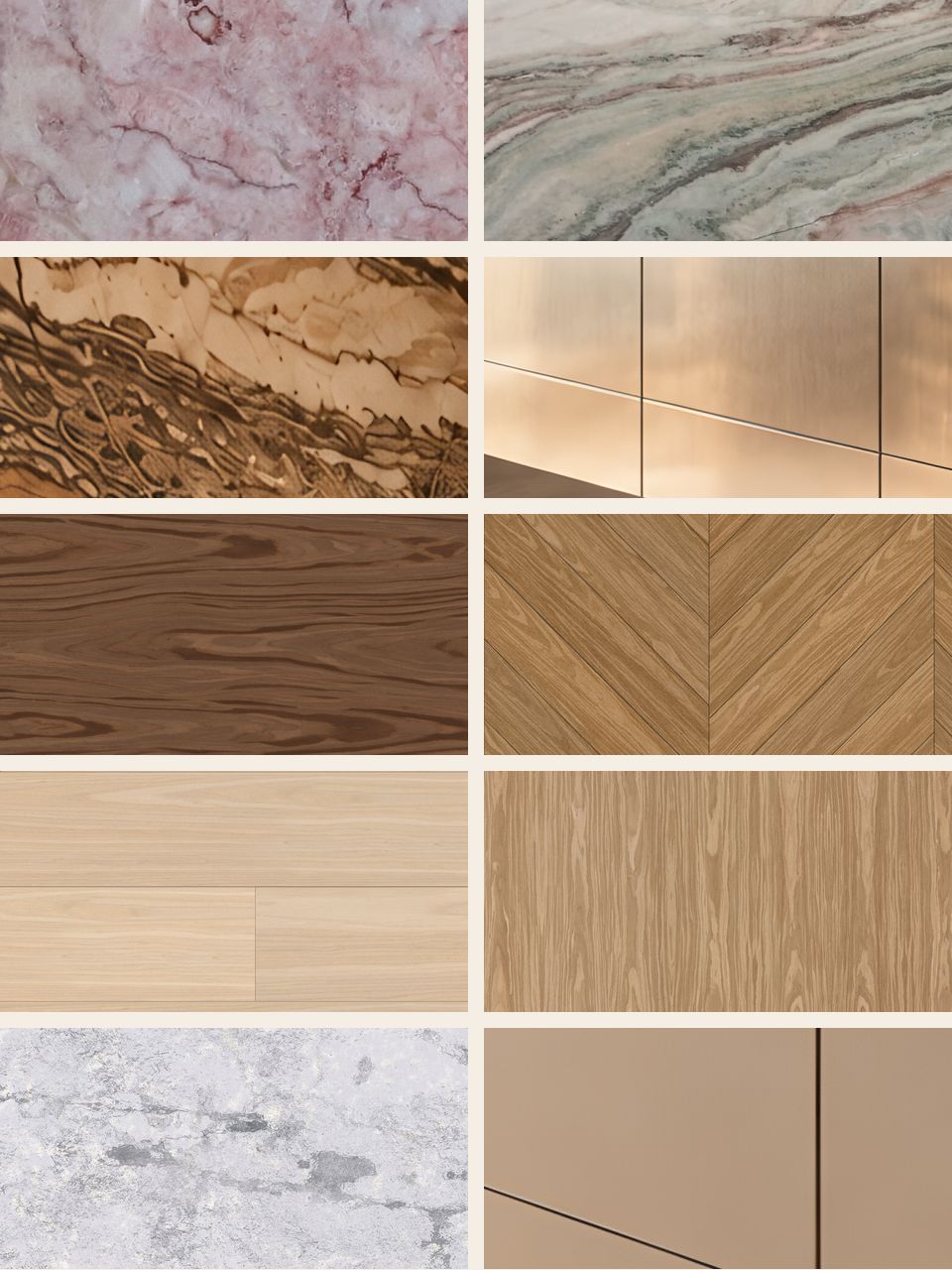
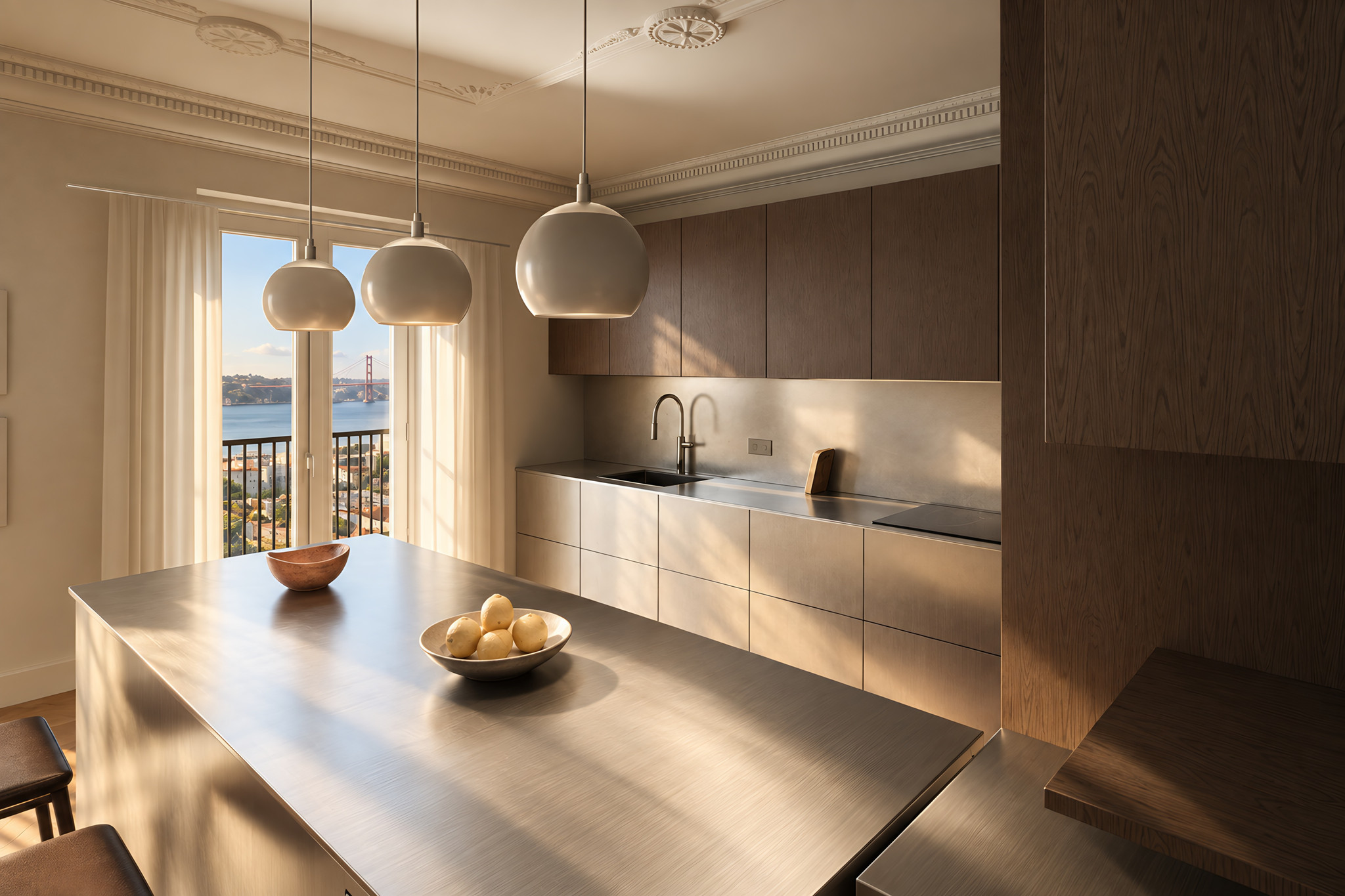
4. Materials you touch. Floors, kitchen, bathrooms, windows. These are where budgets get cut once a project is sold. Get the specification attached to your contract. At Pedra Friso it names the floors (engineered oak, chevron in Units 1 and 2), the kitchen maker (Silvas), the appliances, the bathroom stones (Rosa Lioz, Viana Verde, Tiger Onyx) and the windows (solid timber, laminated double glazing with a thermal break).
5. Access. A lift in a hilltop building changes everything. Parking, in the centre, usually has to be solved separately. Pedra Friso has no private parking; there is public parking three minutes away. We would rather tell you than let you find out.
6. The developer. Look at what they have finished. Read the CPCV carefully. Ask who the architect is (ours, at Pedra Friso, is alva arquitectos) and who manages the works.
Buying off-plan
Most new developments in Lisbon are sold before they are finished. In practice that means:
- You sign a CPCV (promissory contract) with a deposit, and possibly further stage payments. The CPCV should state the specification, the areas, the payment schedule and the completion date, and what happens if any of them change.
- The escritura (deed) is signed when the building has its use licence. Pedra Friso’s completion is planned for Q2 2028.
- When you buy a home from a professional seller, Decree-Law 84/2021 gives you a 10-year guarantee for defects in structural elements and 5 years for other defects, counted from delivery. That applies to restored buildings sold by a developer as well as to new builds.
Use an independent lawyer, not one recommended by the seller.
Tax in 2026
Two numbers matter. IMT (transfer tax) for residents follows the 2026 brackets, rising to a flat 6% between €660,982 and €1,150,853 and a flat 7.5% above that for a main home. Since 25 May 2026, under Decree-Law 97/2026, non-resident buyers pay a flat 7.5% on residential property regardless of price, with no exemptions. The difference can be refunded if they become tax resident within two years or let the property at a moderate rent for at least 36 months in the first five years. Stamp duty of 0.8% applies on top. If you are planning to move to Portugal, the timing of your tax residence and your deed is worth discussing with your lawyer.
Where our projects sit
Our portfolio of new developments in Lisbon is mostly restoration. That is a choice. We like old buildings and the streets they stand on, and we think a well-restored building, with a new structure behind its façade, gives you the advantages of new build without the anonymous address.
- Pedra Friso, near Chiado: twelve apartments, T0 to T2, in a restored historic building. For sale.
- Duque, Saldanha: a renovated T3, ready to move into. For sale at €1,125,000.
- Bombarda, near Saldanha: a renovated T4. Reserved.
- Palácio Catarina, Santa Catarina: a T4 duplex in a restored palácio. Available now.
- Fonseca, Santo António: a renovated T2 apartment. Available now, at €1,025,000.
- Santa Catarina building, Santa Catarina: a restoration with six T1 and T2 apartments and two commercial units. Coming soon.
- Alto do Lagoal, Oeiras: a new villa west of Lisbon, coming. Our one true new build.
All of them are on the Portfolio page. Prices are shown on each project page or available on request.
Sources: Decreto-Lei n.º 84/2021, de 18 de outubro (Diário da República), consumer guarantee on immovable property; Decreto-Lei n.º 97/2026, de 20 de maio (CIMT art. 17.º n.º 10), Portal das Finanças; AT Ofício Circulado 40131/2026; AT Ofício Circulado 40129/2026.